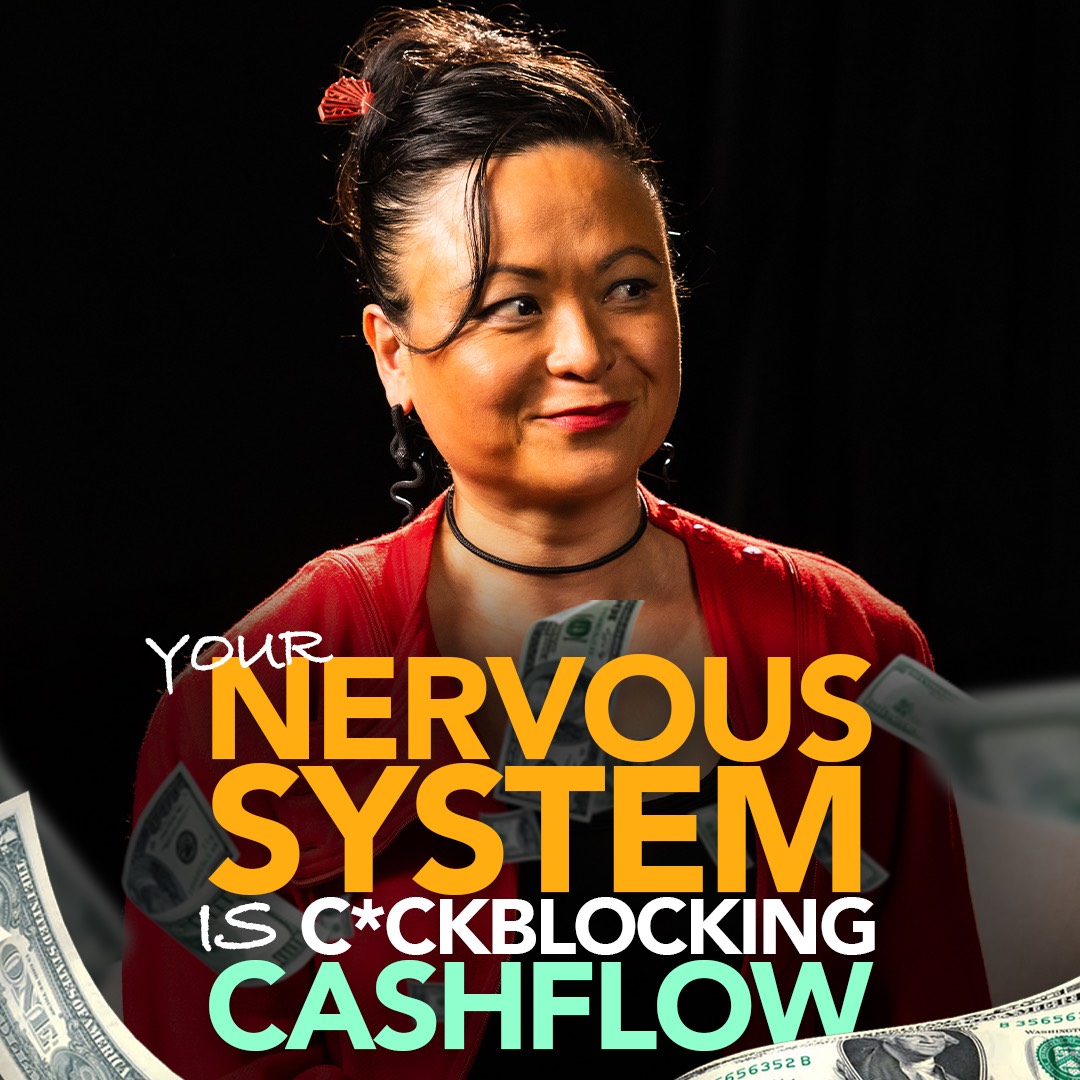

My hair started falling out while Red Lantern was winning awards.
That’s what almost no one understands about burnout in people like us. It doesn’t arrive when you’re failing. It arrives at altitude, while the business is thriving and everyone around you has decided you have never been sharper. I was running the most awarded Vietnamese restaurant in the world and quietly coming apart at the same time, in a place no trophy could reach. My body had started keeping record.
So when high performers hear the word burnout, most of them flinch away from it. Burnout is for people who collapse. You are not collapsing. You are shipping. You are hitting the number. And that, exactly that, is why you will be one of the last people to notice what is happening to you.
Why high performers miss it
Most burnout checklists were written for people whose work falls off a cliff. Can you still cope? Have you stopped caring? Can you do the job? You answer no, no, and of course I can do the job, and you close the tab and get back to it.
But burnout in a high performer doesn’t start in the work. It starts everywhere around the work. You are still delivering. You just stopped feeling it. The win that should have meant something glances off you. The thing you built no longer moves you. Joy is usually the first to go quiet, and since joy was never on your dashboard, nobody clocks its absence. Least of all you.
The work becomes your alibi. As long as it holds, you tell yourself you are fine. But the work is the last thing to break. So by the time it finally does, you have been burning for years.
What it actually looks like in someone who is still winning
You sleep and wake up tired. Your nervous system has idled at high revolutions for so long it has forgotten how to drop into a real idle. The engine never switches off, so the rest never restores.
You can’t sit still without reaching for your phone. Stillness reads as threat. The second there is nothing to do, the discomfort arrives, and you reach for a screen to make it stop. That is not weak discipline. That is chemistry, and I will get to it.
And the body starts sending invoices. I worked with a man in his late fifties. Four businesses, every one of them successful. Years of pain through his shoulders and his back. Every scan came back clean. Every specialist was baffled. There was nothing structurally wrong with him. There was something structurally wrong with the life he had never let himself feel. The body had been sending the invoices for years. He had marked every one of them unread.
Then there is the fuse. Some of us sharpen into irritation and snap at the people we love over nothing. Others go flat and watch our own lives through glass. Different costume, same problem. A nervous system with no room left to hold what is moving through it.
And you have tried things. Therapy. The app. The retreat. The ice bath. The holiday that worked for nine days. None of it held. That is not proof you are broken. It is proof you have been treating the wrong floor of the house.
Why more rest will not fix it
The wellness industry will not tell you this, because its whole model depends on you not knowing it. For someone who has lived at pace for years, stress is not just a feeling. It is a chemistry your body now runs on. Cortisol and adrenaline stop being the emergency and become the baseline. The system expects them. It needs them. And the day you finally lie on a beach and the supply drops, your body does not exhale. It goes into withdrawal.
That is why the holiday never delivers what the brochure promised. Three days twitchy and irritable, one good afternoon near the end, and within a week of landing home the old setting has you back. You lowered the input for a fortnight. You never moved the baseline.
Rest is not the cure, because exhaustion was never the disease. The disease is a nervous system that learned, long before you had words, that speed is safety and stillness is danger. You cannot out-rest a survival pattern. You can only retrain it.
Before you call it stress, name it
Here is something you can do today, before any of the deeper work. Stress is not actually an emotion. Stress is the noise a system makes when it is full of feelings it has never stopped to examine. Underneath the word there are only a handful of primary ones: anger, fear, sadness, joy, and the creative, sexual energy most leaders were taught to leave at the door. Nearly everything else is one of those five wearing a costume. Anxiety is fear thrown forward into a future that has not happened. Resentment is anger that has sat in the body too long. Guilt is sadness pointed at yourself.
So the next time you reach for the word stressed, stop and ask a more honest question. Which of the five is this, actually? Name the real feeling and two things happen at once. The vague pressure in your chest gets a shape, and a shape can be worked with in a way a fog never can. And you take back the first piece of authority from a nervous system that has been running the show unsupervised. This is not journaling for its own sake. It is the smallest possible version of the whole method. Name it, feel it, let it move. A feeling that is genuinely allowed to move lasts about ninety seconds. It is the story you wrap around it that keeps it alive for years.
Burnout, or just behind?
Worth separating, because people confuse the two and they need opposite medicine. Behind is a workload problem. Too much, genuinely, and the fix is real and external. Cut, delegate, hire, say no. When you are behind, doing less lands like oxygen.
Burnout does not answer to a lighter week. Clear the whole calendar and you still wake up tired, still feel nothing, still cannot rest. That is the test. If less restores you, you were behind. If less leaves you anxious with nothing to push against, you are burnt out, and the work is on the inside, where no amount of rescheduling reaches.
Where recovery actually starts
Everything that failed you came at this from the top down. Think your way calm. Plan your way calm. Affirm your way calm, as if the mind were running the show. The mind has not run this since you were small. The pattern lives in the body, and the body has never once been argued out of anything.
So you work the other direction. Body first. You regulate the system, and the identity follows. Not relaxation, which fades by Monday, but nervous system resilience which teaches your system to come back to baseline on its own and to widen what it can hold before it tips into alarm.
In practice it is smaller than people expect. A few minutes before your feet touch the floor, deciding who you intend to be today instead of letting the old chemistry decide for you. Ninety seconds with a hand on your chest until your body registers there is no threat in the room. Catching the old reaction in the half second before it fires, and choosing again. Most days you will miss it. Then one day you will catch it. Then more.
It’s not fast, and I wouldn’t trust anyone who promised you fast. The early weeks can feel worse before they feel better, the way coming off anything does. The discomfort is not the work failing. It is the first evidence it is working.
And here is the part that stuns the high performers most. The edge stays. The drive that built everything does not leave. What leaves is the dread underneath it, the certainty that if you stop for one moment the whole thing falls down. You keep the ambition. You lose the fear that was driving it.
If you saw yourself anywhere in this, your next move is not more willpower poured into the same tired machine. I made a free 80-minute masterclass that walks through exactly why high performers get stuck here, and what actually moves it. Start there. Your body has been carrying you, and quietly invoicing you, this whole time. It is time you learned its language.
Keep reading: Nervous System Resilience For Leaders · How To Choose A Coach Who Works The Body
With Love,
Pauline